Humidity Chambers: Working, Applications, Benefits & Industry Trends
Humidity chambers are specialized environmental testing systems designed to maintain controlled levels of temperature and relative humidity. They help researchers and quality teams understand how products behave when exposed to humid or changing environmental conditions.
Moisture can influence many physical, chemical, and electrical properties. Metals may experience corrosion, electronic components can develop insulation problems, packaging materials may absorb moisture, and polymers can change their mechanical characteristics.
A humidity chamber creates repeatable conditions so these effects can be studied under controlled laboratory conditions. Instead of relying on unpredictable outdoor weather, researchers can establish a defined temperature, humidity level, and testing duration.
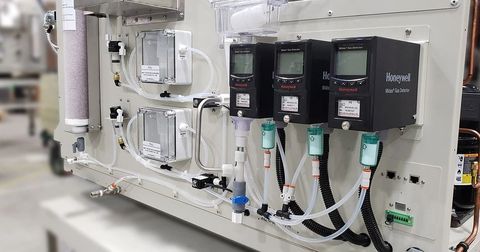
The basic humidity chamber working principle involves heating, cooling, humidification, air circulation, and electronic control. Sensors continuously monitor environmental conditions, while a controller adjusts the chamber to maintain the selected test parameters.
Relative humidity, commonly written as RH, represents the amount of water vapor in air compared with the maximum amount the air can hold at a particular temperature.
Modern environmental test chambers may include programmable controllers, digital displays, data recording, alarms, and automated test cycles. These features make long-duration humidity testing easier to monitor and document.
Why Humidity Chambers Matter Today
Humidity testing has become important because products are expected to operate reliably across different climates and storage environments. A component designed for a dry indoor environment may behave differently when exposed to tropical humidity, condensation, or repeated temperature changes.
Humidity chambers help identify potential weaknesses before products enter wider use. This can support product development, quality control, reliability engineering, and laboratory research.
Several industries use humidity testing for different reasons:
- Electronics: Evaluates insulation, connectors, circuit boards, sensors, and electronic assemblies.
- Automotive: Examines components exposed to moisture, temperature variation, and long-term environmental stress.
- Pharmaceuticals: Supports stability and packaging studies under controlled environmental conditions.
- Textiles: Helps evaluate moisture-related changes in fabrics and materials.
- Packaging: Examines how humidity influences paper, cardboard, films, seals, and protective materials.
- Construction materials: Studies moisture-related changes in coatings, composites, adhesives, and other materials.
- Renewable energy: Supports environmental testing of selected electrical and electronic components used in demanding outdoor conditions.
The main problem addressed by humidity testing is uncertainty. A controlled chamber provides repeatable environmental conditions, making it easier to compare samples and identify patterns.
For example, a laboratory may test two materials under the same temperature and relative humidity for a specified period. Researchers can then compare changes in appearance, strength, electrical performance, mass, dimensions, or corrosion.
How Humidity Chambers Work
A typical humidity chamber combines several systems that work together.
Temperature control: Heating elements raise the internal temperature when required, while refrigeration or cooling mechanisms lower it.
Humidity generation: Water is introduced into the chamber atmosphere through a controlled humidification system. The method can vary according to chamber design.
Air circulation: Fans distribute temperature and moisture throughout the working space. Uniform circulation is important because significant differences between locations can affect test results.
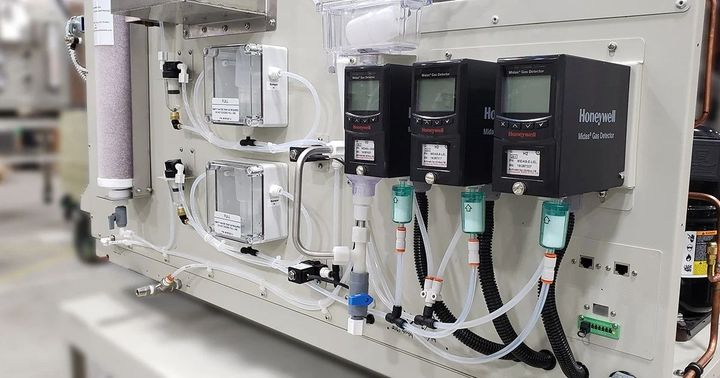
Sensors: Temperature and humidity sensors measure actual chamber conditions. The controller compares these measurements with programmed values.
Control system: A programmable controller adjusts heating, cooling, and humidification to maintain the selected conditions.
Data monitoring: Many modern chambers can record environmental readings throughout a test. Recorded information can help laboratories review test stability and identify deviations.
A simplified humidity testing sequence can be represented as follows:
| Stage | Typical Activity | Main Purpose |
|---|---|---|
| Preparation | Place test specimens inside | Establish test setup |
| Programming | Set temperature and RH | Define environmental conditions |
| Stabilization | Allow conditions to reach target | Create consistent atmosphere |
| Exposure | Maintain programmed conditions | Study moisture effects |
| Monitoring | Record temperature and RH | Verify test conditions |
| Evaluation | Examine specimens | Identify environmental changes |
Test parameters should always be selected according to the applicable test method and the characteristics of the specimen.
Applications Across Major Industries
Humidity chambers are used in many forms of environmental testing.
In electronics manufacturing, damp heat testing can help evaluate moisture resistance and long-term reliability. Printed circuit assemblies, connectors, sensors, insulation systems, and other components may be exposed to controlled humidity.
In the automotive sector, environmental testing can be applied to electrical components, interior materials, coatings, seals, and other parts that may experience moisture during transportation, storage, and operation.
In pharmaceutical and laboratory research, controlled humidity can support stability studies and packaging investigations. Temperature and humidity can influence the condition of certain materials and formulations, making controlled environments important for standardized testing.
The textile industry uses controlled humidity environments for conditioning and evaluating materials. Moisture can influence fabric dimensions, strength, appearance, and handling characteristics.
For packaging materials, humidity testing can show how paper-based products, corrugated materials, films, adhesives, and protective layers respond to moisture exposure.
In materials science, researchers can use environmental chambers to investigate degradation mechanisms, dimensional changes, corrosion, and moisture absorption.
Benefits of Humidity Chamber Testing
Controlled humidity testing provides several practical advantages for research and manufacturing laboratories.
Repeatability: The same environmental conditions can be recreated for different specimens.
Controlled exposure: Temperature, relative humidity, and test duration can be defined according to the applicable test procedure.
Early identification of weaknesses: Environmental testing can reveal moisture-related problems before wider product evaluation.
Data-based evaluation: Recorded temperature and humidity information can support analysis and documentation.
Research flexibility: Programmable chambers can support different environmental profiles, depending on their technical specifications.
Reduced dependence on outdoor conditions: Laboratory testing avoids many variations associated with seasonal weather.
The value of a humidity chamber depends on proper calibration, chamber uniformity, suitable sensors, correct test parameters, and appropriate specimen preparation.
Recent Industry Trends and Developments
Environmental testing technology has continued to develop during 2025 and 2026, with greater attention to measurement accuracy, automated data collection, programmable test cycles, and laboratory traceability.
One important standards development occurred in 2025. The International Electrotechnical Commission lists IEC 60068-2-78:2025 as a newer edition for damp heat, steady-state environmental testing. The standard addresses the ability of components and equipment to withstand high-humidity conditions.
Another relevant development is the continued focus on chamber performance verification. IEC 60068-3-6 provides guidance for confirming the performance of temperature/humidity chambers and supports consistent environmental test conditions.
Digital monitoring is also becoming more important. Modern laboratory environments increasingly use electronic records, programmable test sequences, remote data access, and automated alarms to improve traceability.
Sustainability is another developing consideration. Environmental chambers may use refrigeration systems, electrical heating, humidification, and continuous air circulation. Laboratory planners are therefore paying greater attention to energy consumption, equipment efficiency, heat management, and refrigerant considerations.
In India, the Bureau of Indian Standards continues to maintain standards and laboratory-related information connected with environmental and humidity testing. BIS records include IS 9002 Part 3, covering humidity chambers for environmental testing of electronic and electrical items, and IS 9002 Part 6 for constant relative humidity chambers.
Laws, Standards, and Testing Policies
Humidity chamber testing is generally governed by the test standard applicable to the product rather than by one universal humidity-chamber law.
International environmental testing commonly refers to the IEC 60068 family, with specific parts covering different environmental conditions and procedures. Laboratories should identify the exact edition and test method required for their product category.
In India, relevant Indian Standards may apply depending on the product and testing purpose. BIS provides a searchable Know Your Standard platform containing information about Indian Standards, amendments, notifications, testing laboratories, and related documentation. The platform was updated in May 2026.
Some Indian standards and conformity procedures specify conditioning chambers with defined temperature and relative humidity capabilities. For example, a BIS document published in January 2025 specifies a conditioning chamber capable of maintaining 27 ± 2°C and 65 ± 5% relative humidity for a particular testing application.
Requirements can differ significantly between industries. A laboratory should therefore follow the applicable product standard, testing protocol, calibration requirements, and laboratory quality framework rather than assuming that one chamber setting applies to every test.
Tools and Resources for Humidity Testing
Several general resources can help users plan and manage environmental testing.
- Temperature and RH data loggers: Record environmental conditions during testing.
- Humidity sensors: Measure relative humidity at defined locations.
- Temperature sensors: Verify chamber temperature independently when required.
- Calibration records: Document sensor and instrument verification.
- Test templates: Help laboratories record specimen details, settings, duration, and observations.
- Environmental test calculators: Support humidity, temperature, dew-point, and related calculations.
- Laboratory information systems: Organize test records and environmental data.
- Standards databases: Help identify applicable environmental testing procedures.
- Maintenance checklists: Support routine inspection of sensors, water systems, seals, fans, and refrigeration components.
Proper documentation is particularly important for long-duration tests. Records should identify the specimen, test method, environmental conditions, duration, equipment identification, calibration status, and observations.
Frequently Asked Questions
What is a humidity chamber used for?
A humidity chamber is used to expose materials, components, or products to controlled temperature and relative humidity conditions. It helps evaluate moisture-related performance, stability, durability, and environmental resistance.
What is the difference between a humidity chamber and a temperature chamber?
A temperature chamber primarily controls temperature, while a humidity chamber controls both temperature and relative humidity. Some environmental chambers can control temperature and humidity together and perform programmed environmental cycles.
Which industries use humidity chambers?
Electronics, automotive, pharmaceuticals, textiles, packaging, materials research, electrical equipment, and several other industries use humidity chambers for environmental testing and conditioning.
How is humidity measured inside a chamber?
Humidity is generally measured using electronic humidity sensors or other calibrated measurement devices. The readings are monitored by the chamber controller and may also be recorded independently for verification.
Why is chamber calibration important?
Calibration helps establish confidence that the chamber's measurement and control systems are producing the required environmental conditions. It is particularly important when test results need to be repeatable and traceable.
Conclusion
Humidity chambers provide a controlled environment for studying how materials and products respond to moisture and temperature. Their applications range from electronics and automotive components to textiles, packaging, pharmaceuticals, and advanced materials research.