Ventilator Machine Guide: Types, Working Principle & Respiratory Support
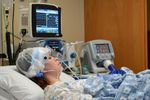
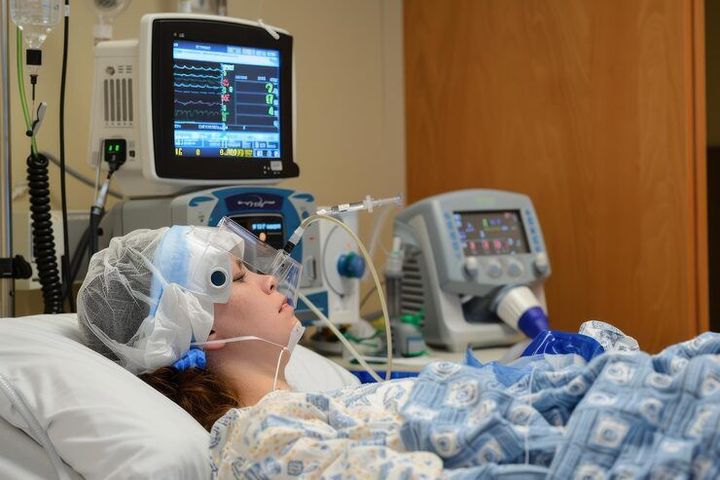
A ventilator machine is a medical device designed to support breathing when a person cannot breathe adequately on their own. It moves a controlled mixture of air and oxygen into the lungs and helps remove carbon dioxide from the body.
Ventilators are widely associated with intensive care units, emergency departments, operating rooms, and specialized respiratory care environments. Depending on the patient's condition, respiratory support may be delivered through a mask or through an airway tube.
Mechanical ventilation exists because several illnesses and injuries can interfere with normal breathing. Severe pneumonia, respiratory failure, neurological conditions, major surgery, chest injuries, and certain complications can reduce the body's ability to maintain effective breathing.
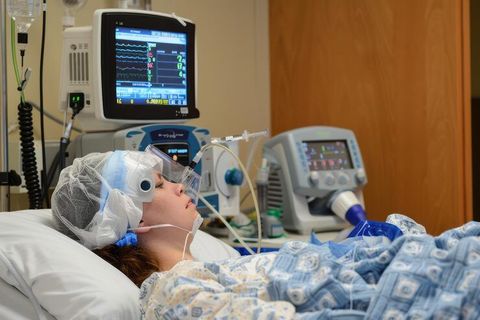
A modern ventilator machine generally includes a gas delivery system, breathing circuit, sensors, controls, alarms, and a display. These components work together to monitor and regulate breathing parameters.
The machine does not simply push air into the lungs continuously. It can be programmed to deliver specific pressures, volumes, flow patterns, oxygen concentrations, and breathing rates according to clinical requirements.
How Does a Ventilator Work?
The basic working principle of mechanical ventilation is relatively straightforward. The machine receives air and medical oxygen from appropriate sources, mixes them when required, and delivers the gas through a breathing circuit.
Sensors continuously monitor factors such as pressure, flow, and delivered volume. The ventilator uses this information to regulate each breath.
A simplified breathing cycle includes:
- Gas enters the ventilator from an appropriate source.
- The machine controls the gas mixture and flow.
- Air or oxygen-rich gas moves through the breathing circuit.
- The patient receives the supported breath through the selected interface.
- Exhaled gas leaves through the circuit.
- Sensors measure relevant breathing parameters.
- Alarms alert trained clinical staff when selected limits are exceeded.
Ventilator settings are not identical for every patient. Clinical teams determine appropriate parameters according to the patient's condition, lung function, oxygenation, carbon dioxide levels, and response to treatment.
Major Types of Ventilator Machines
Ventilator technology includes several categories designed for different respiratory support situations.
Invasive Mechanical Ventilators
Invasive ventilators are commonly used when a patient requires substantial respiratory support. A breathing tube is placed into the airway, allowing the ventilator to control or assist breathing more directly.
These systems are commonly associated with intensive care and complex respiratory conditions. They require trained healthcare professionals because incorrect settings or inadequate monitoring can create serious risks.
Non-Invasive Ventilators
Non-invasive ventilation provides respiratory support through an interface such as a face mask or nasal interface rather than an airway tube.
Common forms include positive airway pressure systems such as CPAP and BiPAP. CPAP generally maintains continuous positive airway pressure, while BiPAP can provide different pressure levels during inhalation and exhalation.
Non-invasive ventilation can be useful in selected respiratory conditions, but it is not appropriate for every patient.
Transport Ventilators
Transport ventilators are designed for situations where respiratory support must continue while a patient is moved between locations. Their design generally emphasizes portability, battery operation, compact construction, and reliable monitoring.
They may be used during transfers within healthcare facilities or in emergency transportation environments.
Neonatal and Pediatric Ventilators
Newborns and children have different respiratory requirements from adults. Specialized ventilator systems can provide more controlled support for smaller patients.
These systems may include sensitive flow measurement and specialized modes designed for neonatal or pediatric respiratory care.
Home-Use Respiratory Support Devices
Some respiratory support devices are designed for carefully selected patients outside hospital environments. Their use depends on medical assessment, prescribed settings, monitoring arrangements, and appropriate training.
Home respiratory equipment should not be adjusted without professional guidance.
Why Ventilator Technology Matters Today
Respiratory diseases remain an important healthcare concern worldwide. Ventilator machines can support patients when natural breathing is insufficient, giving clinicians additional time to treat the underlying condition.
The technology affects several groups, including:
- Patients experiencing acute respiratory failure
- People undergoing major surgical procedures
- Newborns requiring specialized respiratory support
- Patients receiving intensive care
- Emergency medical teams
- Respiratory therapists and nurses
- Physicians and critical care specialists
- Biomedical engineering teams
- Healthcare facility administrators
Ventilator technology also connects with broader medical infrastructure. Reliable electricity, medical oxygen, appropriate breathing circuits, monitoring equipment, trained personnel, and preventive maintenance all influence safe respiratory support.
A ventilator should therefore be viewed as part of a larger respiratory care system rather than as an isolated machine.
Key Features of Modern Ventilator Machines
Modern ventilators may include numerous technical functions intended to improve monitoring and control.
Important features can include:
- Pressure and volume monitoring
- Adjustable oxygen concentration
- Flow measurement
- Multiple ventilation modes
- Integrated alarms
- Patient monitoring displays
- Battery backup
- Data recording
- Humidification compatibility
- Automatic leak detection
- Adjustable respiratory rate
- Pressure limitation controls
The exact features vary according to the device category and intended clinical environment.
Simple Comparison of Ventilator Categories
| Ventilator Type | Typical Interface | Main Environment | Key Characteristic |
|---|---|---|---|
| Invasive ventilator | Airway tube | Intensive care | Advanced respiratory support |
| Non-invasive ventilator | Mask or nasal interface | Hospital or selected home settings | Positive airway pressure |
| Transport ventilator | Airway tube or mask | Patient transportation | Portable design |
| Neonatal ventilator | Specialized interface | Neonatal care | Sensitive respiratory control |
| Pediatric ventilator | Mask or airway tube | Pediatric care | Smaller patient requirements |
Recent Developments in Ventilator and Respiratory Technology
Respiratory equipment continues to develop alongside broader medical device technology.
In 2025, the World Health Organization published updated technical specifications for health-facility medical oxygen systems, emphasizing the importance of appropriate oxygen sources, storage, distribution, regulation, and monitoring. These systems are closely connected with respiratory equipment such as ventilators.
The WHO also continued expanding educational resources around respiratory equipment, including mechanical ventilators, CPAP and BiPAP devices, patient monitors, oxygen concentrators, and high-flow nasal oxygen equipment.
Another important development is stronger attention to the complete medical-device lifecycle. Equipment selection, installation, operation, cleaning, preventive maintenance, corrective maintenance, and eventual decommissioning are increasingly treated as connected parts of respiratory equipment management.
Device safety also remained important during 2025. Regulatory databases recorded recalls involving certain respiratory and ventilation devices, demonstrating why healthcare facilities need structured equipment tracking and safety monitoring.
In 2026, regulatory authorities also continued transitioning away from temporary COVID-19-era emergency frameworks. The U.S. FDA stated in August 2026 that certain COVID-19 enforcement policies for medical devices were no longer in effect, while existing emergency authorizations could remain under applicable legal provisions.
These developments show that respiratory technology is moving toward stronger lifecycle management, equipment safety, oxygen-system planning, monitoring, and clinical training.
Laws, Regulations, and Safety Policies
Ventilator machines are medical devices and are therefore subject to regulatory requirements in many countries.
In India, medical devices are regulated under the Medical Devices Rules, 2017, administered through the Central Drugs Standard Control Organization and related regulatory authorities. The framework covers areas such as device classification, licensing, quality requirements, manufacturing controls, testing, and regulatory oversight.
Requirements can differ according to device classification and intended use. Healthcare organizations should therefore follow the applicable regulatory documentation, technical standards, clinical requirements, and manufacturer instructions.
Internationally, regulatory frameworks vary. Medical devices may be subject to authorization, conformity assessment, quality-management requirements, post-market surveillance, labeling rules, and safety reporting.
Important safety principles include:
- Use equipment according to its intended purpose.
- Follow authorized operating instructions.
- Maintain appropriate alarm settings.
- Check breathing circuits and connections.
- Monitor oxygen supply and power availability.
- Perform preventive maintenance according to the equipment plan.
- Keep accurate equipment records.
- Investigate safety alerts and recalls.
- Ensure trained personnel operate advanced ventilation equipment.
Tools and Resources for Learning About Ventilators
Several general resources can help students, healthcare administrators, biomedical engineers, and interested readers understand respiratory equipment.
Useful resources include:
- Medical device technical manuals
- Ventilator operating guides
- Respiratory physiology textbooks
- Clinical ventilation reference charts
- Oxygen-system planning templates
- Equipment maintenance checklists
- Patient monitoring reference sheets
- Medical device regulatory databases
- Ventilator simulation software
- Biomedical engineering training materials
- Respiratory care educational courses
Training resources can also help users understand the complete equipment lifecycle, from selection and setup to operation, cleaning, preventive maintenance, and decommissioning.
Frequently Asked Questions
What is the main purpose of a ventilator machine?
A ventilator provides mechanical assistance when a person cannot breathe adequately without support. It can help deliver controlled breaths and support oxygen and carbon dioxide management while clinicians treat the underlying condition.
What is the difference between invasive and non-invasive ventilation?
Invasive ventilation normally uses an airway tube, while non-invasive ventilation generally uses a mask or similar interface. The appropriate method depends on the patient's medical condition and clinical assessment.
Can a ventilator completely replace natural breathing?
A ventilator can provide substantial breathing assistance, and some modes can provide most or all of the mechanical work of breathing. However, the clinical objective depends on the patient's condition, treatment plan, and recovery.
Why are oxygen systems important for ventilators?
Ventilators may require appropriate medical gas supplies to deliver the prescribed oxygen concentration. Reliable oxygen generation, storage, distribution, regulation, and monitoring are therefore important components of respiratory care infrastructure.
Who should operate a mechanical ventilator?
Advanced mechanical ventilators should be operated and adjusted by appropriately trained healthcare professionals. Settings require clinical judgment and continuous patient assessment.
Conclusion
Ventilator machines are an important part of modern respiratory and critical care. They support breathing when normal respiratory function is inadequate and can be used through invasive or non-invasive approaches depending on clinical circumstances.